


What to Expect at Your Appointments
1
Consultation
If possible, you can come to one of our clinic locations to meet the team, see photos and have all your questions answered as we go over our detailed process of making a prosthesis with you.
2
Pattern
An impression is taken in the clinic, as well as multiple measurements, colour matching, and the development of the basic shape.
3
Painting Shell
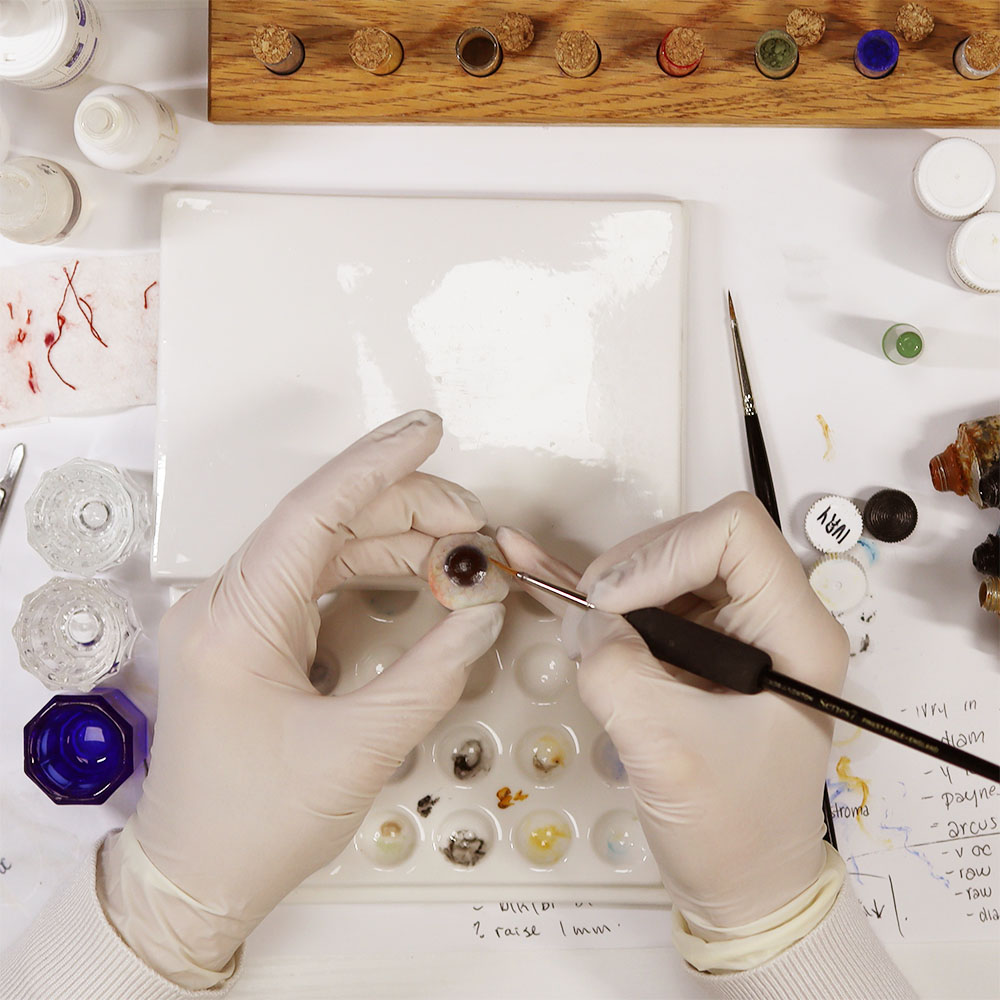
With the prosthesis half made, the details of the eye are painted by hand, regularly placing it back in the socket to check details.
4
Final Fitting
Any final adjustments are made, and we cover regular care and hygiene information, sign the paperwork, and send you out into the world with your new prosthesis.
Care & Hygiene
Prosthetic eyes typically stay in the socket for up to two months. After two months, you must remove your prosthesis to clean it. Gently remove your prosthesis, and rub the surface firmly with a soft cloth, liquid soap and water to remove the protein deposit. Once the surface is smooth, please reinsert your prosthesis until it is time to clean again. For detailed instructions, please see the drop-down menus below.
Do not remove your prosthesis too often. Inserting and removing it too frequently rubs against the delicate tissues and creates discharge.
If you experience mild discharge in the morning, simply wet the end of a cotton tip applicator and softly rub it across the front surface of the prosthesis and your eyelids until clean. Often, discharge collects in the inner corner, so twist the Q-Tip, and the discharge should wrap around it. If your discharge persists, worsens or becomes yellow in colour, please see an eye doctor as you may require drops. As a reminder, you need to have your ocular prosthesis polished in our office annually. This will definitely help reduce discharge.
Need to book your yearly check up?


Consultations
Occasionally, before your enucleation or evisceration surgery, we can perform a consultation. At that time, you can meet our team, hear about our process, see before and after photos, and we can answer all your questions. Given the reason for your eye loss, this appointment isn’t always possible or necessary. We encourage you to explore our website as there is a lot of helpful information and photographs if you are unable to have a consultation before surgery.
Cost Coverage
Most BC residents are covered by the Fair Pharmacare Program, and eligibility is income-based. Therefore, coverage for each individual will be different.
Extended Health Care companies may cover a percentage of the balance after accessing any Pharmacare benefits. It is best to contact your extended healthcare provider for clarification. Please note that we can not directly bill any extended healthcare companies at this time.
According to their policies, those with ICBC, WorkSafe, First Nations Health Authority, DVA, and Refugee status are eligible under these individual programs.
Please get in touch with our office if you require further details.


